

Article credits: Sodeek (@aderinola08 on X)
I still remember Barcelona vs Chelsea back in the 2012 UCL. Chelsea had won the first leg 1-0, but I wasn’t worried. In fact, I was absolutely certain Barcelona would hit back in the second leg. At the start of the second half (even with Barcelona still not certain of progressing), I was telling anyone who would listen that Pep’s team would demolish Chelsea in the second half and that he would have some tactical adjustment ready that would unravel them completely. I went ahead to say, “Pep ma pa Chelsea danu danu loni.” For non-Yoruba speakers, that translates as “Pep will kill Chelsea today.” That’s just the faith you develop in a Pep team. So, you can imagine how I felt when City announced him as their next manager. Consternation doesn’t quite cover it.
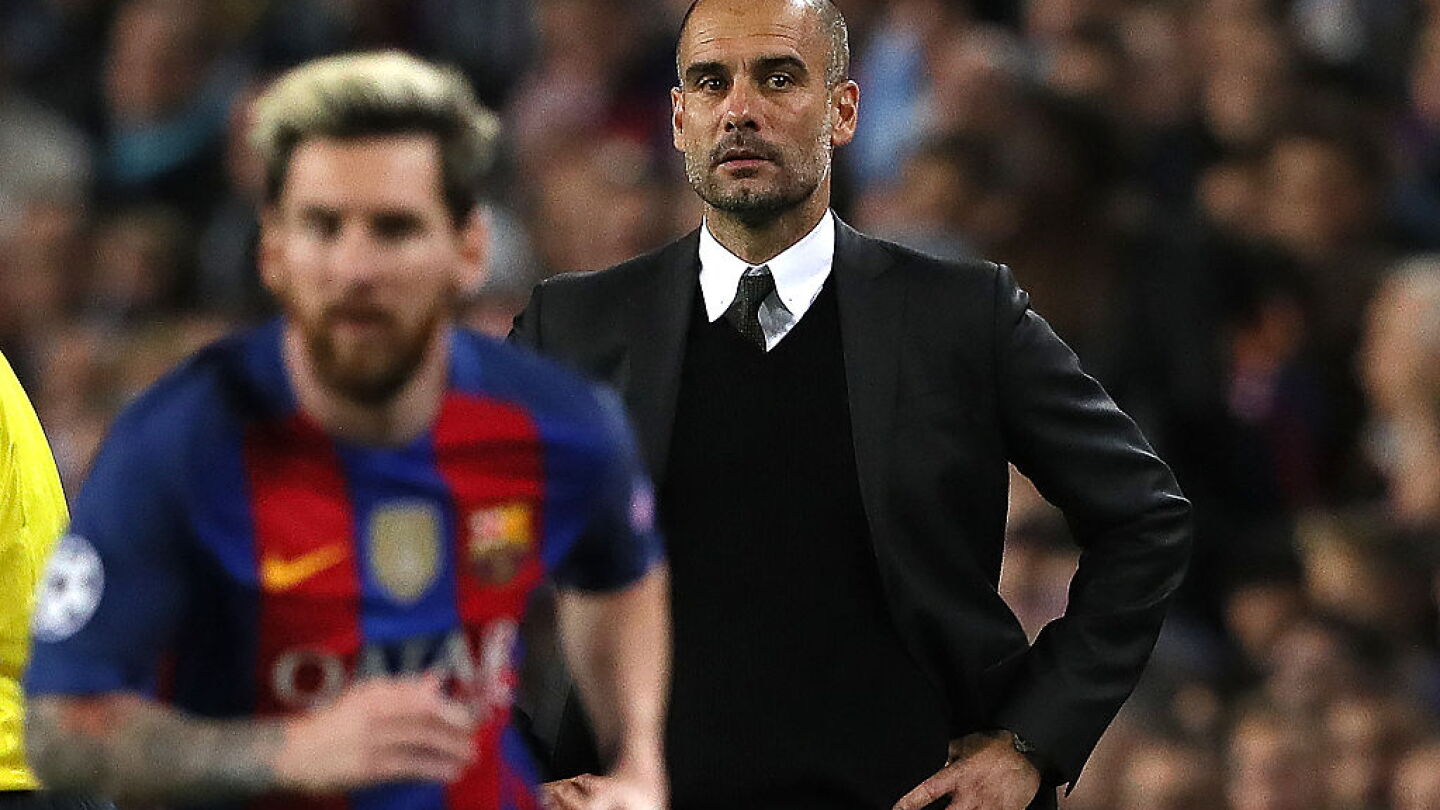
Pep during his reign at Barca (Image: nbcsports.com)
For years, Guardiola had been building some of the most dominant sides football had ever seen. His Barcelona team redefined the sport with Tika-Taka. His Bayern team continued where that left off. By the time Manchester City secured his signature in 2016, the rest of England sensed something was coming, and they weren’t wrong. Although a part of the media did state that Pep would struggle in the EPL given his style of play. They claimed he would have to change his philosophy to win in the Premier League.
They appeared to be right, as his first season was a reality check. No trophies. The first barren campaign of his managerial career. Critics sharpened their knives, saying: “We knew his possession-based philosophy would not survive the Premier League’s intensity.” Some did not waste time in writing Pep off. Pep, though, did what Pep always does. He adapted. The following season was something else entirely. City stormed to the title with 100 points, the “Centurions,” as they came to be known, shattering records for wins, goals, and points in a single season. It wasn’t just a title. It was a statement.
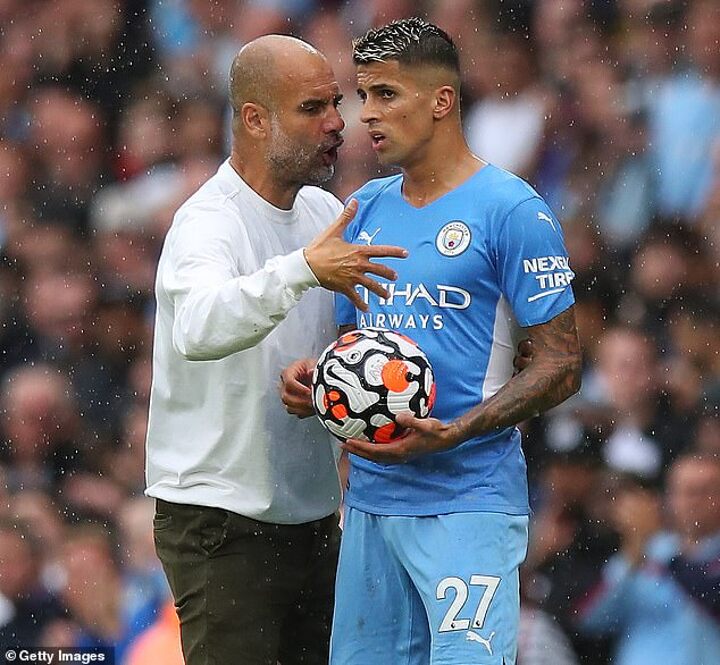
Passing instruction to Joao Cancelo (Image: allfootballapp.com)
Over the next decade, he turned City into the benchmark for English football. Six league titles. A dynasty. And perhaps most remarkably, four consecutive Premier League titles, and for context, this is something no club had ever managed before. The trophies tell one story, but the influence tells another. Under Guardiola, full-backs became playmakers. Goalkeepers became the first line of attack. Possession stopped being just a style and became a weapon. Clubs across the league began chasing more technical players, rethinking their structures, and scrambling to keep pace. Almost all the teams wanted to play out from the back; they copied his style totally. He didn’t just dominate the Premier League. He rewired it.
The crowning moment came in 2022-23. After years of near misses in Europe, painful ones at that, City finally won the Champions League, beating Inter Milan in the final and completing a historic treble. It was the trophy that had always felt just out of reach at the Etihad. When it arrived, it felt earned in the deepest sense. There was also the matter of the 2018-19 season, when City became the first men’s English club to sweep all four major domestic trophies in a single campaign — the Premier League, FA Cup, League Cup, and Community Shield. A domestic quadruple that may genuinely never be repeated.
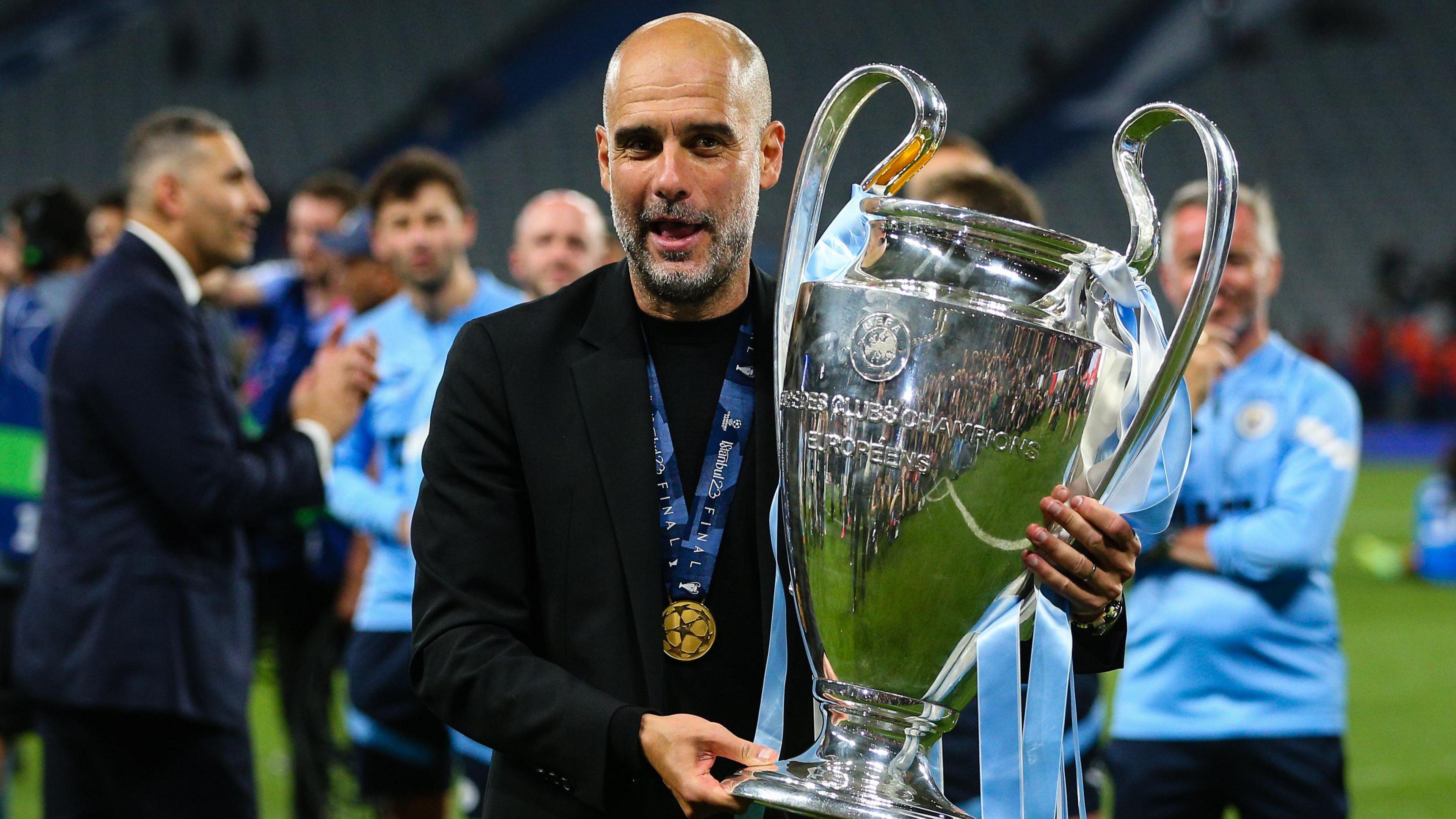
Pep with the elusive UCL “big ears” trophy for City (Image: bbc.com)
Laid out plainly, the decade reads like a highlight reel: six Premier League titles, four in a row, a 100-point season, a domestic quadruple, a Champions League. Record after record. But numbers only go so far. The harder thing to quantify is what he did to the league itself, how he raised the floor, forced rivals to innovate, pushed coaches to think differently, and players to add dimensions to their game. The Premier League was already the most competitive league in the world when he arrived. He left it tactically richer and more sophisticated than he found it. Jürgen Klopp had to explicitly describe competing against Pep Guardiola as exhausting. He explained that their fierce rivalry and Guardiola’s consistency at Manchester City meant that if his Liverpool team dropped even a few points, they would be punished immediately, which made some seasons feel incredibly draining. He did not just stop there; he currently has two former assistants with trophies for other English clubs in the league. Arteta, who was formerly under Pep, just won his first EPL title, and Maresca did not just bring Leicester City back to the EPL in his first season; he actually won the Club World Cup with Chelsea. What greater honor is there for a manager to have his assistants carry on his touch in the league?

Waving goodbye to the EPL (Image: Darren Staples/AFP/Getty Images)
When City unveiled him in 2016, success felt likely. The scale of what actually followed? Nobody quite saw that coming. A decade on, the legacy is settled, not just City’s greatest manager, but one of the most consequential figures the Premier League has ever had.
By Sodeek, an avid Pep fan follower and a City fan