

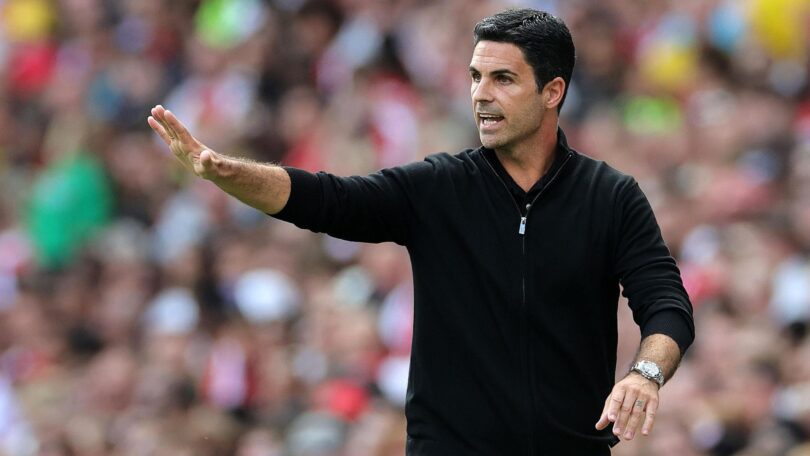

There was a time when Mikel Arteta’s Arsenal could be neatly summarized as structurally rigid, a meticulous, almost robotic adherence to positional play where every pass, overlap, and underlap felt scripted to the millimeter. Critics noted that while the Gunners had mastered high-volume dominance, they could occasionally be rendered predictable, particularly when opposition blocks sat deep and dared them to break through. The opening stretch of this campaign, beginning with a statement 3–0 dismantling of Manchester City in the Community Shield and running through three distinctly challenging Premier League victories with six goals scored and just one conceded, has shredded that narrative entirely. What we are witnessing now is Arteta’s grand project evolving from structural control to controlled chaos. Producing a Premier League-topping expected goals (xG) metric of nearly 1.8 per match alongside 101 touches inside the opposition penalty area, Arsenal have not merely picked up where they left off; they have metamorphosed into an adaptable chameleon, fluidly shifting shapes within matches and proving that open-play football, rather than reliance on dead-ball situations, remains the heartbeat of their footballing philosophy.

Declan Rice in control. Image: livescore.com
At the center of this structural fluidity is a subtle yet transformative alteration in the build-up phase involving Declan Rice. Rather than functioning purely as an aggressive box-to-box presence or a lone pivot, Rice has increasingly been deployed to drop deep, often forming a temporary three-man backline or sitting alongside the central defenders to anchor the initial phase of possession. Completing over 90% of his passes with progressive distribution from deep channels, Rice acts as the primary release valve. This single move releases a domino effect across the entire pitch. By giving Rice the responsibility of hoovering up defensive balance and orchestrating from low areas, this permits both fullbacks, Ben White on the right and Riccardo Calafiori on the left, to step completely out of traditional positional boundaries. Instead of simple inverted fullbacks holding the midfield double pivot, White and Calafiori frequently advance into advanced central pockets, functioning almost as a fluid double number ten pair. Opponents who expect traditional full-back overlaps are left scrambling as Arsenal construct five-channel overloads, populating the half-spaces with two nominally defensive players who possess the technical security to turn and create in dangerous zones.
This intricate positional rotation has reignited the genius of Martin Ødegaard. After periods last season where opposition teams attempted to choke off the captain by double-teaming his right-hand half-space, Ødegaard has blossomed in this new, unfettered ecosystem, registering two goals across the opening three league matches after scoring the clinical third in the Community Shield. No longer tethered strictly to the right channel, he has become the grand conductor of Arteta’s orchestra, dropping into the center, drifting wide left, or operating as a roaming free agent. Because Rice’s deep positioning draws out the opposition press and the advancing fullbacks pull central defenders out of line, Ødegaard is gifted the one thing elite playmakers crave above all else: time between the lines. His press resistance, body shape upon receiving, and tempo-setting distribution have made him the unmistakable focal point of everything Arsenal constructs. When Ødegaard dictates, the team moves as a single, synchronized organism.

Ødegaard the dictator. Image: arsenal.com
The left flank, in particular, has developed into a cauldron of unpredictable movement, driven by the emergence of Riccardo Calafiori and his burgeoning partnership with Christos Tzolis. Calafiori is not merely an inverted fullback; he is an absolute disruptor. The Italian possesses an instinct for recognizing space that defies his defensive designation, already registering two assists in league play after netting just 24 seconds in the Community Shield with late, surging runs straight through the central channels directly into goal-scoring positions inside the penalty box. When paired with Tzolis on the wing, the dynamic becomes explosive. Tzolis holds width or cuts inside with aggressive directness, creating a continuous dilemma for the opposing right-back and center-half. As Tzolis draws attention wide, Calafiori underlaps into the vacated space; when Tzolis inside-drives, Calafiori overlaps or attacks the back post. This partnership invites pure, calculated chaos, tearing apart compact defensive structures and forcing opponents into split-second miscommunications.

Tzolis joining celebrating a goal with Calafiori. Image: kicker.de
Simultaneously, the maturity shown by 19-year-old Myles Lewis-Skelly has given Arteta another dimension of tactical elasticity. Starting all three league games as well as the Community Shield, Lewis-Skelly’s performances have been nothing short of blissful. Operating with a composure that belies his years, his press resistance under high physical pressure allows Arsenal to bypass defensive traps effortlessly. Completing 88% of his short and medium passes while completing multi-directional recoveries, his ability to turn in tight spaces, sustain possession under duress, and execute progressive passes breaks open game states that previously felt congested.
Up front, Kai Havertz continues to embody the ideal modern focal point for an Arteta team. Already boasting two goals in three league appearances alongside his Community Shield finish, Havertz does not play as a classic target man, nor does he function purely as a false nine; rather, he is a perpetual motion machine that destabilizes defensive lines through sheer intelligence of movement. Winning 14 aerial duels across three fixtures, his hold-up play has reached a level of physical dominance where he holds off physical center-backs with ease, but it is his foray in and out of the opposition box that creates systemic panic. Havertz will drop twenty yards to link play with Ødegaard, drawing a center-back with him, only to sprint back into the box to attack the resulting vacant space. His subtle decoy runs continuously clear lanes for incoming runners like Calafiori and White, making him a nightmare to mark over ninety minutes.

Havertz making Arsenal more dangerous. Image: nyt.com/athletic
What makes this tactical blueprint truly fascinating is how Arteta has tailored his setup specifically to each opponent across the first three Premier League games without losing his core identity. Against an aggressive, high-pressing opponent in the opening game, Arsenal relied on rapid vertical progressions, utilizing Rice’s deep distribution and Havertz’s chest-downs to break through the press in two passes. In the second fixture, against a low-block defense that prioritized central density, Arteta adjusted by utilizing Calafiori and Tzolis to overload the left flank, relentlessly carving out low crosses and dynamic underlaps from open play. By the third league match—a tight 2–1 victory over Chelsea—Arteta shifted the build-up structure mid-game, instructing Ben White to stay wider while Lewis-Skelly pushed higher, instantly breaking the opposition’s man-marking scheme. None of these matches required banking on set-pieces or defensive luck; every goal and high-value chance flowed directly from sophisticated, open-play structural manipulation, generating 34 shots with 17 on target.

Goals & xG stats v Chelsea. Image: Opta Analyst
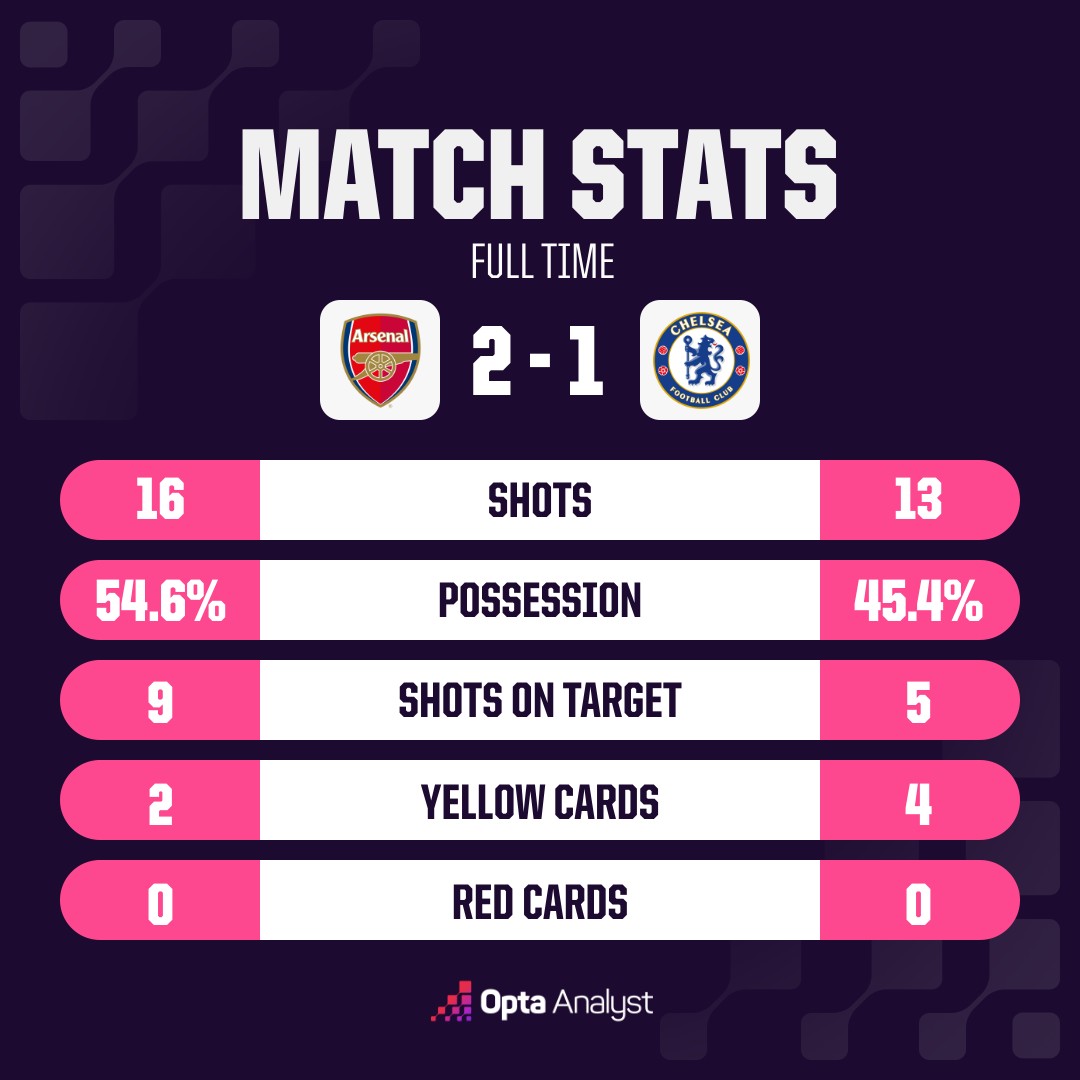
Full time stats. Image: Opta Analyst
Equally decisive has been Arteta’s management of game state through his substitutions. In previous seasons, bench rotations occasionally led to a drop in technical quality or a retreat into passive defending. Now, the bench is an extension of the tactical board. Introducing profile-specific substitutes like Martín Zubimendi, Mikel Merino, Eberechi Eze, and Piero Hincapié late in matches, Arteta ensures the team’s structural integrity remains untouched. Whether bringing on midfield locks to control tempo or fresh defensive legs to solidify defensive balance, the quality of play never dips. Arsenal maintain their high line, rest-defense compactness, and 60%+ average possession dominance, ensuring that the final twenty minutes of a match look just as controlled as the first twenty.
As the season begins to gather momentum with nine points from nine, it is clear that Mikel Arteta has engineered something profoundly sophisticated at the Emirates Stadium. By moving away from rigid positioning and embracing fluid rotations, double-number-ten dynamics, and tactical versatility backed by elite underlying numbers, he has built a team capable of solving whatever puzzle an opponent presents. Arsenal are no longer just a well-coached side executing a plan; they are now pushing for elite status, an adaptable footballing force capable of dominating through intelligence, physical authority, and sublime technical execution.